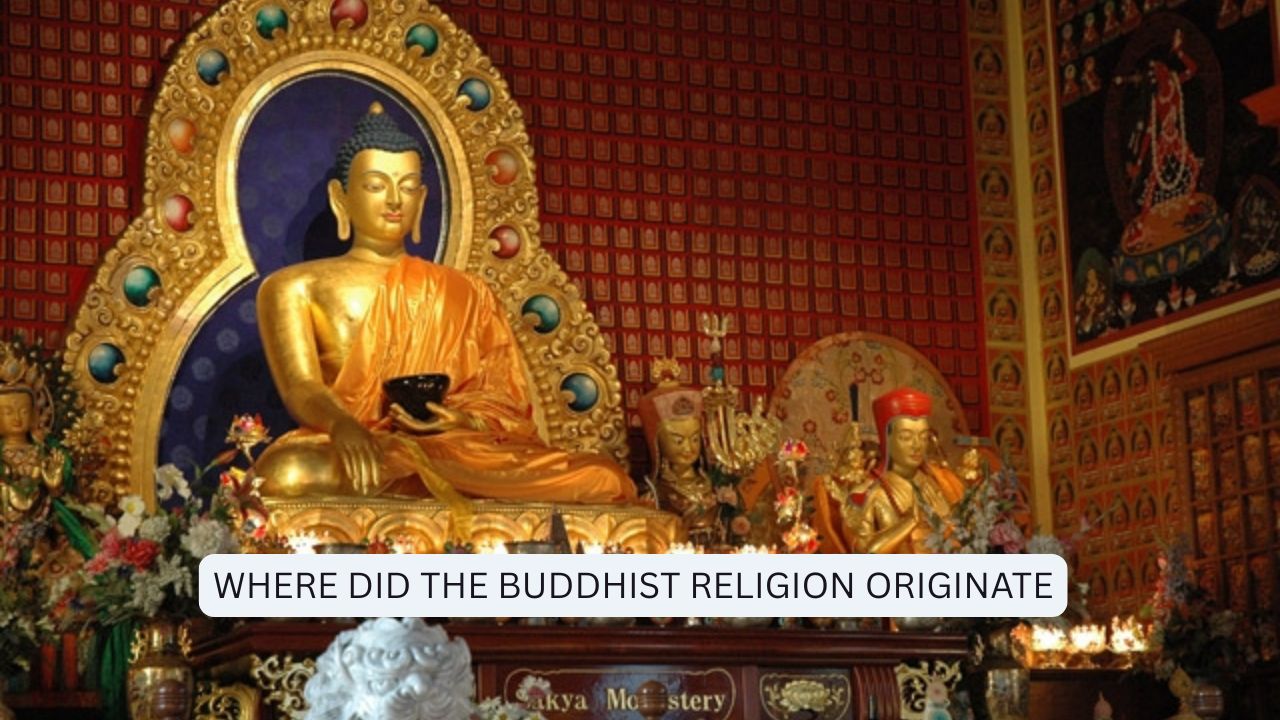
Are you curious about what the location of Buddhism started? It was it located in China, Japan, Thailand or somewhere else? Most people think of Buddhism as a part of East Asia. Its roots go further, beginning in early India.
Knowing the place Buddhism began is similar to tracing the beginnings of a huge stream. If you take it long enough to the east, you’ll see the humble origins of Buddhism.
Why Understanding the Origin Matters
Understanding the place of birth for Buddhism can help us comprehend its teachings more clearly. The culture shapes beliefs. Geographical influences influence the philosophy. Then, history is the reason for change.
A Quick Overview of Buddhism
Buddhism is among the most important religions in the world. It is a way of overcoming pain through wisdom, ethics as well as the discipline of mind. What is the place where it all get started?
The Birthplace of Buddhism
Buddhism was first introduced in the northeastern part in the Indian subcontinent and was located which is today Nepal as well as the northern region of India.
Ancient India in the 6th Century BCE
In the sixth century BCE, India was filled by spiritual discussions. Imagine it as an open market of thoughts. Philosophers questioned rituals. Philosophers challenged the traditional ways of thinking. The world was changing.
At this point when Buddhism began to emerge.
The Kingdom of Kapilavastu
The ancient Buddha was born to a royal family of the Shakya clan. The kingdom of his father, Kapilavastu, was located close to the border between India and Nepal. It is often referred to as the birthplace of Buddhism.
The Life of Siddhartha Gautama
His Birth in Lumbini
Siddhartha Gatama, who was later to become the Buddha was born in Lumbini (present-day Nepal). The oldest records of his birth place date him in the year 563 BCE.
His mother Queen Maya is believed to have delivered her baby on a trip within a park beneath an oak tree. In the present, Lumbini is a UNESCO World Heritage Site and is a important pilgrimage site.
Royal Upbringing and Early Life
Siddhartha was raised with luxurious surroundings. His father was adamant that he would become an imposing king. Therefore, he protected himself from all suffering, no illness and no ageing, but no loss of life.
But life doesn’t stay hidden forever.
The Four Sights
A day later, Siddhartha ventured outside the palace, and he saw four things such as an elderly person an ill person an unidentified body and a monk who was wandering around.
The “Four Seens” stunned him. He realised that pain was not just a local issue.
The Great Renunciation
Leaving the Palace
At the age of 29, Siddhartha made a bold choice. He gave up the power and wealth of his the family. Imagine escaping everything that is comfortable to find the Truth.
This is exactly what he did.
The Search for Truth
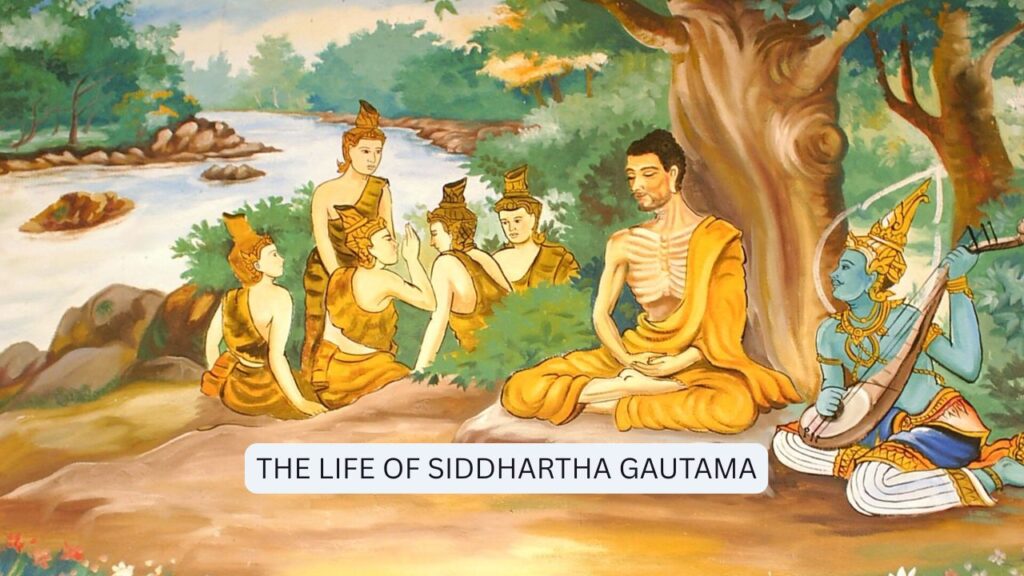
He was a religious man for a long time, and he followed strict asceticism. He was fasting. He sat and meditated. He studied with spiritual guides.
However, nothing could bring his peace to last.
Enlightenment Under the Bodhi Tree
Meditation in Bodh Gaya
In the end, Siddhartha sat under a fruit tree in Bodh Gaya (present-day Bihar, India). He pledged to not rise until he discovered the truth.
Following a long meditation session the man was blessed with an enlightenment.
Becoming the Buddha
When he was 35 years old, Siddhartha changed his name to “The Buddha,” meaning “The Awakened One.”
Just like the other, Buddhism was born–not as a religious practice, but instead as an actualization.
The First Sermon at Sarnath
The Four Noble Truths
In Sarnath, near Varanasi, Buddha delivered his first sermon. Buddha taught his Four Noble Truths:
- The human condition is a constant source of suffering.
- It is caused by desires.
- The suffering can come to an end.
- There’s a solution to stop suffering.
Simple. Direct. Revolutionary.
The Eightfold Path
The Eightfold Path as a way to guide ethics and moral discipline.
The moment was the official foundation of the Buddhist community (Sangha).
Early Spread of Buddhism in India
Buddhism was introduced to the northern part of India in the time of Buddha’s life.
Support by Kings
Merchants and local officials backed the cause. The monasteries were constructed. The teachings were spread via oral tradition.
The Role of Emperor Ashoka
One of the major changes was made by the emperor Ashoka who was in the middle of the century BCE. After witnessing the horrors and bloodshed of conflict, Ashoka embraced Buddhism and spread it across his kingdom.
He constructed stupas and pillars throughout India. The inscriptions he wrote are among the oldest physical proofs of the Buddhist origins.
Expansion Beyond India
While it was established within India, Buddhism didn’t stay in a secluded.
Spread to Sri Lanka
The son of Ashoka Mahinda brought Buddhism into Sri Lanka. It thrived in Sri Lanka and soon became essential to the identity of the island.
Spread to China and East Asia
Trade routes, such as those of the Silk Road, Buddhism reached China at the beginning of the 1st century CE. It then traveled across Korea as well as Japan.
Spread to Southeast Asia
Countries such as Thailand, Myanmar, Cambodia and Laos have embraced Buddhism in their respective cultures, shaping them profoundly.
In a way, even as Buddhism was gaining popularity across the world however, it slowly declined in India because of changing political and social conditions.
Archaeological Evidence of Buddhism’s Origin
Ancient Texts
The earliest Buddhist writings, referred to by the name of Tripitaka (Pali Canon) were written down in writing before they were written down and published in Sri Lanka.
Ashokan Pillars
Stone pillars constructed by Ashoka particularly Sarnath, the Lion Capital of Sarnath (now India’s symbol of national pride) and confirm Buddhism’s solid Indian origins.
Buddhism’s Cultural Roots in Ancient India
Influence of Hindu Traditions
Buddhism began to emerge within the context of a Hindu culture. The concepts of karma and rebirth had been in use for centuries, but were modified.
Reaction to Social Structure
Buddhism was a movement that challenged the caste system’s rigidity. It was a religion that emphasized personal efforts, rather than birthplace.
It was revolutionary at its day.
Why India Is Recognized as the Birthplace
Historical Records
Many ancient sources suggest that Buddhism started in northeastern India around the sixth century BCE.
Sacred Sites Today
The most important pilgrimage sites that are linked to the Buddhist origins of Buddhism includes:
- Lumbini (Birth)
- Bodh Gaya (Enlightenment)
- Sarnath (First Sermon)
- Kushinagar (Death/Parinirvana)
They are the spiritual maps of the Buddhist era’s beginnings.
Conclusion
Where did the Buddhist faith originate?
It was first discovered in northeastern the ancient India (and today’s Nepal) at the time of the sixth century BCE. A single person’s search for the truth in the shade of a trees at Bodh Gaya, a worldwide spiritual movement was established.
As if a tiny spark lit an entire forest, Buddhism started quietly–but its impact spread throughout the world.
Even today, millions remember that sacred place where one man chose to wake up over his ignorance.
FAQs
1. Did Buddhism first established by a monk in India, or Nepal?
Buddhism was first introduced within The Indian subcontinent. Buddha was born in Lumbini (now located in Nepal) However, awakening occurred within Bodh Gaya, India.
2. When did Buddhism originate?
In the 6th century BCE around two thousand years in the past.
3. Who is the one who started Buddhism?
Siddhartha Gautama later came to be known by the name of Buddha.
4. What was the reason Buddhism begin in India?
India during that period was the center of theological debates and exploration of spirituality which made it a fertile place for the development of new ideas.
5. Are Buddhism still being practiced in India?
While it did decline in the past, Buddhism remains practiced in India specifically in places such as Ladakh, Sikkim, and in Neo-Buddhist groups.