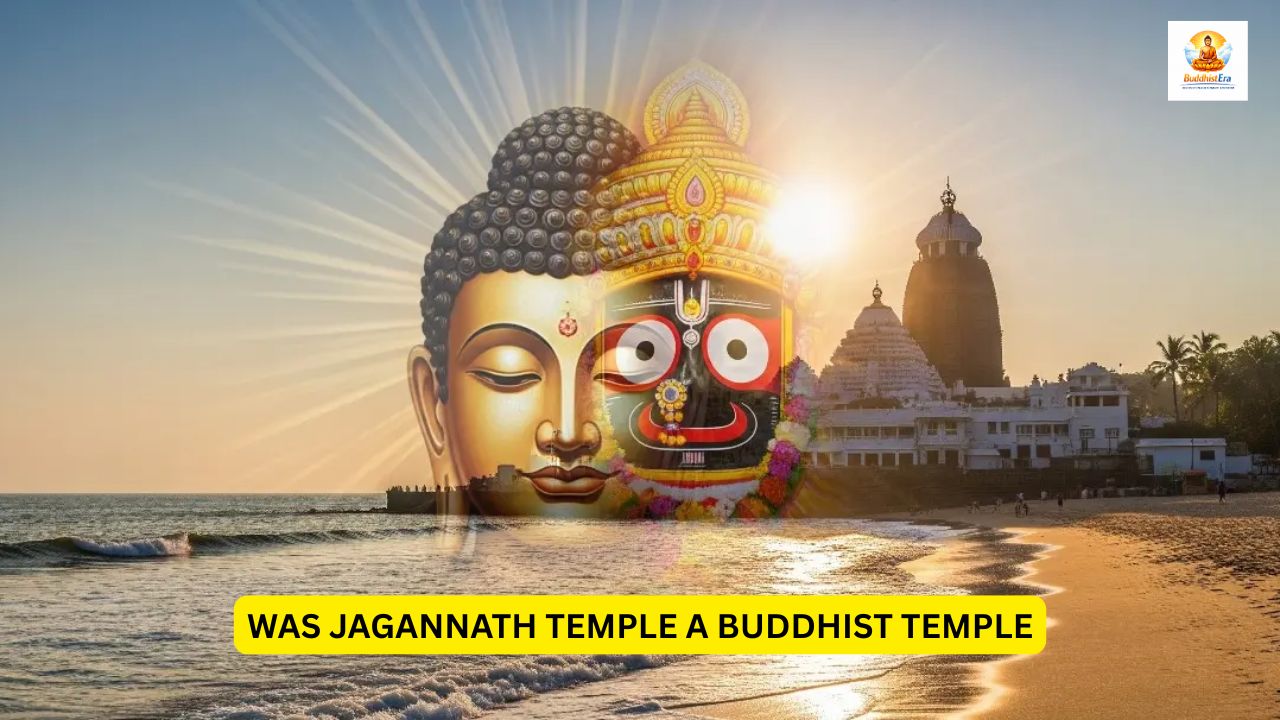
For centuries, the Jagannath Temple in Puri has stood like a silent witness to history—massive, mysterious, and deeply spiritual. But here’s a question that still sparks debate: Was the Jagannath Temple originally a Buddhist temple?
Let’s unpack this layer by layer. Because history, like an onion, has many layers—and sometimes, it makes your eyes water.
Introduction to the Controversy
Why This Question Matters
You might wonder—why does it even matter? Temple is a temple, right?
Not exactly.
The Jagannath Temple isn’t just any temple. It’s one of the Char Dham pilgrimage sites, sacred to millions. If its roots trace back to Buddhism, that would reshape parts of religious history in India. So yes, it matters—academically, culturally, and emotionally.
The Intersection of Hinduism and Buddhism
Hinduism and Buddhism have coexisted in India for over 2,500 years. They’ve influenced each other like neighbors borrowing sugar. Concepts, symbols, rituals—they often overlap.
So, the question isn’t absurd. It’s complicated.
Historical Background of Jagannath Temple
Location and Cultural Importance
The Jagannath Temple is located in Puri, Odisha. This region was once known as Kalinga—a powerful ancient kingdom.
Puri isn’t just a city. It’s a spiritual magnet.
Construction During the Ganga Dynasty
The present temple structure was built in the 12th century.
King Anantavarman Chodaganga Deva
King Anantavarman Chodaganga Deva of the Eastern Ganga Dynasty is credited with constructing the current temple around 1135–1150 CE. Historical inscriptions strongly support this.
So, officially speaking, the temple is medieval—not ancient Buddhist era.
But wait… the story doesn’t end there.
Origins of Lord Jagannath
Tribal Roots and the Sabara Connection
Before the grand temple existed, local tribal communities—especially the Sabaras—worshipped a wooden deity called “Neel Madhav.”
Some historians believe Jagannath evolved from this tribal deity.
Interesting, right?
The Unique Wooden Idols
Unlike typical Hindu idols carved from stone or metal, Jagannath, Balabhadra, and Subhadra are made of wood.
And their large round eyes?
They don’t look like traditional Hindu gods. Some argue they resemble early Buddhist art styles.
Coincidence—or clue?
Buddhist Influence in Odisha
Spread of Buddhism in Ancient Kalinga
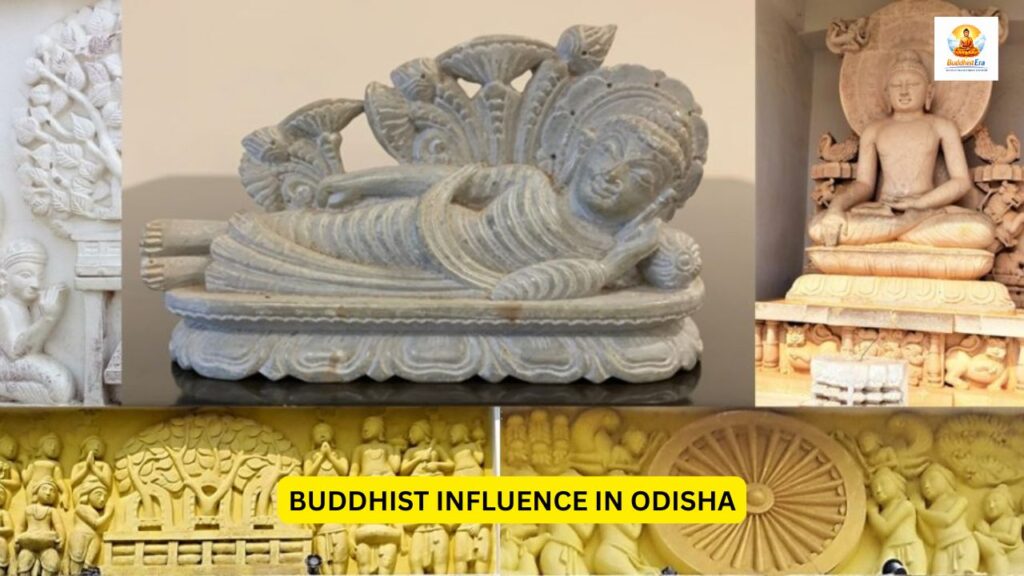
After the Kalinga War (261 BCE), Emperor Ashoka embraced Buddhism. Odisha became a stronghold of Buddhist learning.
Monasteries flourished. Stupas dotted the landscape.
Ashoka and the Kalinga War
The brutal war transformed Ashoka from conqueror to monk-like emperor.
Post-War Religious Transformation
He promoted Buddhism across the region. So yes, Buddhism had a powerful presence in Odisha centuries before the Jagannath Temple was built.
This fuels the argument that perhaps a Buddhist shrine once stood at Puri.
Arguments Supporting the Buddhist Origin Theory
Now let’s look at what supporters say.
Similarities Between Jagannath and Buddha Idols
- Minimalistic design
- Rounded eyes
- Absence of detailed limbs
Some scholars claim these resemble Buddhist icons.
The Rath Yatra and Buddhist Processions
The famous Rath Yatra (Chariot Festival) involves pulling massive chariots.
Guess what? Similar chariot processions existed in certain Buddhist traditions.
Is that cultural borrowing?
Maybe.
The Concept of Trinity
Jagannath, Balabhadra, and Subhadra form a trio.
Some link this to the Buddhist Triratna:
- Buddha
- Dharma
- Sangha
But critics argue this is symbolic stretching.
Counterarguments from Hindu Scholars
Now let’s flip the coin.
Scriptural References to Jagannath
Ancient Hindu texts like the Skanda Purana mention Purushottama Kshetra (Puri) and Lord Jagannath.
These references align more with Vaishnav traditions than Buddhism.
Vaishnav Traditions and Rituals
Temple rituals follow strict Vaishnav Agama practices. Priests belong to traditional Hindu lineages.
Buddhist monasteries follow entirely different ritual systems.
Temple Architecture and Agama Shastra
The architecture is classic Kalinga-style Hindu temple design:
- Vimana (tower)
- Mandapa (hall)
- Garbhagriha (sanctum)
This structure doesn’t match Buddhist stupas or viharas.
Archaeological Evidence and Findings
Excavations Around Puri
Archaeological studies have not uncovered clear evidence of a Buddhist temple beneath the current structure.
Absence of Concrete Buddhist Structure
No stupas. No Buddhist inscriptions directly under the Jagannath Temple site.
That’s important.
Because history leaves footprints—and here, they’re faint at best.
Syncretism: A Blend of Traditions
Here’s where things get interesting.
Tribal, Buddhist, and Vaishnav Elements
Jagannath worship appears to be a melting pot:
- Tribal wooden deity
- Possible Buddhist symbolism
- Strong Vaishnav theology
It’s like a cultural smoothie—multiple ingredients blended over centuries.
Cultural Absorption in Indian Religions
Indian religions often absorb rather than erase.
Buddhism influenced Hinduism. Hinduism reabsorbed Buddhist practices. Tribal traditions merged with both.
So instead of asking “Was it Buddhist or Hindu?” maybe the better question is:
Was it both, at different stages?
Modern Scholarly Perspectives
What Historians Say
Most mainstream historians agree:
The present Jagannath Temple was built as a Hindu temple in the 12th century.
However, they acknowledge earlier tribal and possibly Buddhist influences.
What Devotees Believe
Devotees see Jagannath as a form of Lord Vishnu or Krishna.
For them, the debate is academic—not spiritual.
Faith doesn’t always need footnotes.
Why the Debate Continues Today
Identity and Religious Politics
Religious identity shapes narratives. Some groups emphasize Buddhist links; others reject them firmly.
History sometimes becomes a battlefield of ideas.
Academic Curiosity
Scholars love unanswered questions. And Jagannath Temple offers plenty.
Mystery keeps history alive.
Read also:-
- Was Ashoka Buddhist Before the Kalinga War? The Real Historical Truth
- Where Do Buddhists Go to Pray? Places of Worship Explained
Conclusion:-
So, was Jagannath Temple originally a Buddhist temple?
There is no solid archaeological proof that the current temple was built as a Buddhist structure. The evidence strongly supports its 12th-century Hindu origins under the Ganga dynasty.
However, the region had deep Buddhist roots. Tribal worship practices likely blended with Buddhist and later Vaishnav traditions. Over centuries, layers of culture shaped what we see today.
In short?
The Jagannath Temple is not proven to be a former Buddhist temple—but it may carry echoes of Buddhism within its evolution.
History isn’t black and white. It’s beautifully layered.
And maybe that’s what makes Jagannath so unique.
FAQs:-
1. Is there proof that Jagannath Temple was a Buddhist temple?
No concrete archaeological evidence confirms that it was originally a Buddhist temple.
2. Why do some scholars link Jagannath with Buddhism?
They point to similarities in idol design, regional Buddhist history, and symbolic interpretations.
3. Who built the current Jagannath Temple?
King Anantavarman Chodaganga Deva of the Eastern Ganga Dynasty in the 12th century.
4. Did Buddhism influence Jagannath worship?
Possibly. Odisha had strong Buddhist traditions, which may have culturally influenced later practices.
5. What religion does Jagannath Temple officially belong to?
It is a major Hindu temple dedicated to Lord Vishnu (Jagannath).