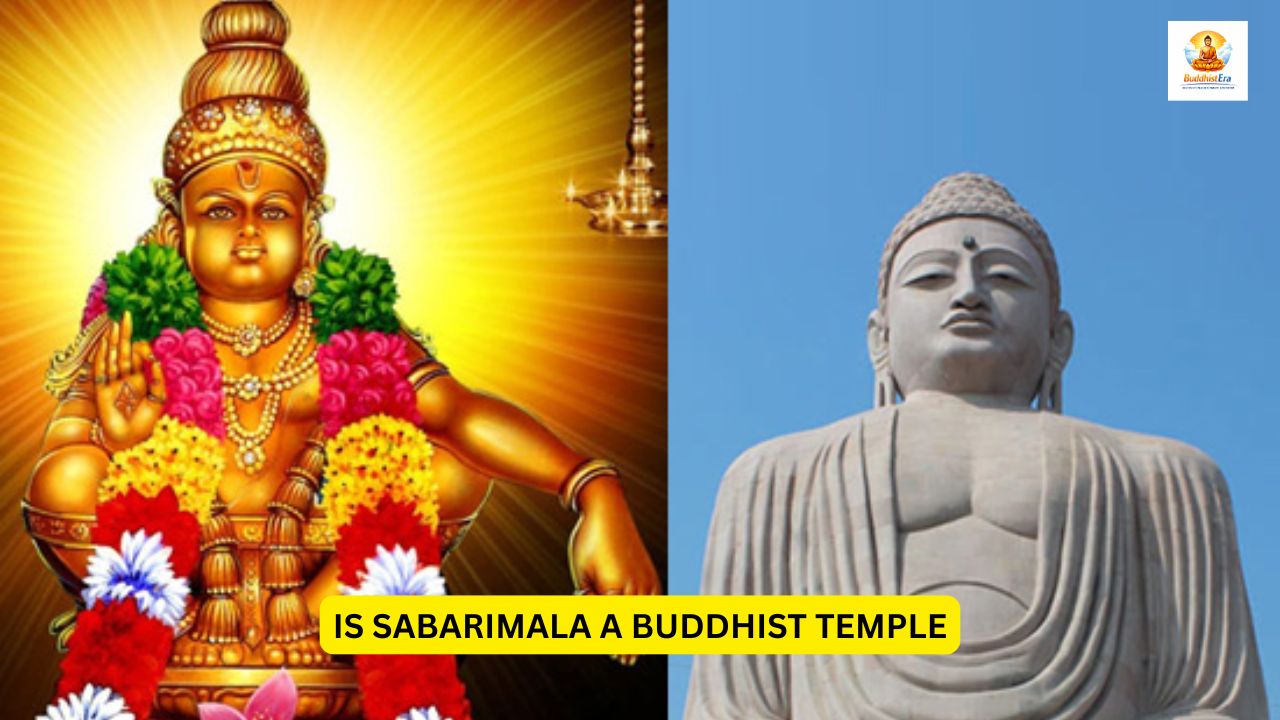
Sabarimala is not just a temple. It’s an emotion, a pilgrimage, and for millions, a sacred journey of discipline and devotion. But over the years, a fascinating and often heated question has surfaced: Is Sabarimala originally a Buddhist temple?
Sounds controversial, right? Let’s unpack it calmly, honestly, and historically—without religious noise or political drama.
Why This Question Exists
This question didn’t pop out of nowhere. Kerala’s deep Buddhist past, combined with the unique rituals at Sabarimala, has led scholars, historians, and critics to delve further. Some see Buddhist fingerprints. Others see pure Hindu tradition.
So, who’s right?
Faith, History, and Politics Intertwined
Religion in India is rarely just about worship. It’s history, culture, migration, and evolution rolled into one. Sabarimala sits right at this crossroads.
Understanding Sabarimala Temple
Location and Geographical Importance
Sabarimala is nestled deep inside the Western Ghats of Kerala, surrounded by dense forests. Historically, such secluded locations were ideal for Buddhist monasteries, which fuels part of the debate.
Who Is Lord Ayyappa
Lord Ayyappa, also known as Dharma Shasta, is the presiding deity of Sabarimala.
Birth Legend of Ayyappa
According to Hindu mythology, Ayyappa was born from the union of Shiva and Vishnu (in Mohini form). This unique origin already sets him apart from mainstream deities.
Ayyappa as a Celibate Deity
Ayyappa is worshipped as a Naishtika Brahmachari—a lifelong celibate. The strict 41-day vrata observed by devotees mirrors monastic discipline, which some argue resembles Buddhist practices.
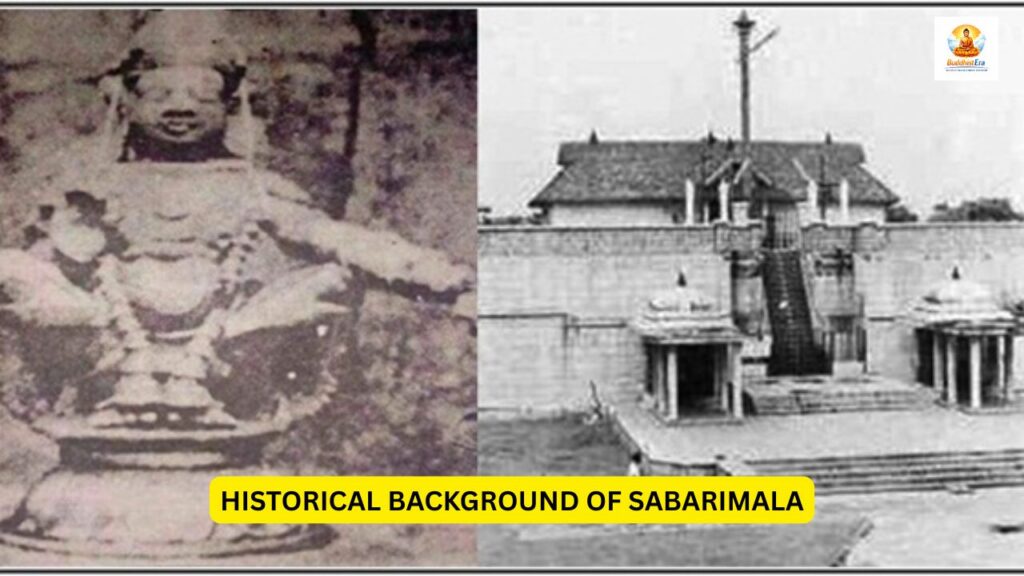
Historical Background of Sabarimala
Early References and Oral Traditions
Interestingly, Sabarimala lacks strong references in early Vedic texts. Most stories come from oral traditions, ballads, and later Puranic sources.
Temple Architecture and Design
Unlike grand Dravidian temples, Sabarimala is simple, minimal, and functional—again aligning with Buddhist monastic aesthetics rather than ornate Hindu temples.
Buddhism in Ancient Kerala
Spread of Buddhism in South India
Between the 3rd century BCE and 10th century CE, Buddhism flourished across Kerala. Ancient ports, trade routes, and royal patronage played a huge role.
Buddhist Monasteries in Kerala
Many historians agree that Kerala once had hundreds of Buddhist viharas, many of which were later absorbed or repurposed.
Decline of Buddhism in the Region
By the 10th–12th centuries, Buddhism declined due to the rise of the Bhakti movement and royal support shifting back to Hindu sects.
Arguments Claiming Sabarimala as a Buddhist Temple
This is where things get interesting.
Etymology of “Sabarimala”
Some argue that “Sabarimala” derives from “Sabari”, linked to ascetics or monks, possibly Buddhist.
Similarities Between Ayyappa and Buddha
- Both renounced worldly pleasures
- Both emphasized discipline and morality
- Both attracted followers beyond caste boundaries
Coincidence or cultural overlap?
Absence of Vedic Rituals
Traditional Vedic rituals like yajnas are largely absent. Instead, emphasis is on vrata, simplicity, and self-control—core Buddhist ideals.
Presence of Buddhist Symbols
Some scholars point to similarities between Ayyappa’s posture and Buddha’s meditation pose, though this remains debated.
Counterarguments from Hindu Scholars
Puranic References to Ayyappa
Texts like the Bhutathanam and Ayyappa Mahatmyam clearly identify Ayyappa as a Hindu deity.
Shaiva-Vaishnava Integration
Ayyappa beautifully blends Shaiva and Vaishnava traditions, something Buddhism does not incorporate.
Temple Rituals and Traditions
Despite differences, rituals like harivarasanam, offerings, and tantric worship firmly place Sabarimala within Hindu practice.
Ayyappa and Buddha: Comparative Analysis
Similarities in Teachings
Both emphasize:
- Moral living
- Detachment
- Compassion
But many Indian philosophies share these traits.
Key Differences in Philosophy
Buddha rejected the concept of a creator god. Ayyappa is explicitly worshipped as a divine being—this is a major theological divide.
Archaeological and Literary Evidence
What Archaeology Says
No definitive archaeological evidence exists to prove that Sabarimala was a Buddhist vihara. The argument remains circumstantial.
Historical Texts and Inscriptions
Unlike confirmed Buddhist sites, Sabarimala lacks inscriptions explicitly linking it to Buddhism.
Role of Bhakti Movement
Absorption of Buddhist Sites
Historically, many Buddhist sites were absorbed into Hindu worship rather than destroyed.
Cultural Assimilation in Medieval India
India’s strength lies in assimilation, not erasure. Sabarimala could reflect this cultural blending.
Modern Political and Social Interpretations
Sabarimala in Contemporary Debates
The debate gained traction during modern socio-political movements, often driven by ideology rather than evidence.
Identity, Faith, and Narratives
Sometimes, history becomes a tool to shape present identities.
What Historians Actually Agree On
Areas of Consensus
- Buddhism existed widely in Kerala
- Cultural overlap is undeniable
Areas of Disagreement
- No conclusive proof of Sabarimala being Buddhist
- Interpretations vary widely
Why the Debate Still Matters Today
Religious Harmony
Understanding shared roots can foster respect, not division.
Understanding India’s Syncretic Past
India’s history isn’t black and white—it’s beautifully blended.
Final Verdict: Buddhist or Hindu Temple?
Based on available evidence, Sabarimala is a Hindu temple with possible Buddhist influences, not a confirmed Buddhist temple converted into Hindu worship.
Conclusion:-
So, is Sabarimala a Buddhist temple? The honest answer is no concrete evidence proves it was. However, the influence of Buddhism on Kerala’s spiritual fabric—and possibly on Sabarimala’s practices—cannot be dismissed. Rather than arguing ownership, perhaps the real takeaway is this: Indian spirituality thrives on shared wisdom. Sabarimala stands as a symbol of that rich, layered heritage.
FAQs:-
1. Is there any proof Sabarimala was a Buddhist temple?
No definitive archaeological or inscriptional proof exists.
2. Why do people compare Ayyappa to Buddha?
Due to similarities in discipline, celibacy, and moral teachings.
3. Did Buddhism exist in Kerala?
Yes, extensively, between 3rd century BCE and 10th century CE.
4. Are Sabarimala rituals Buddhist?
No, they are primarily Hindu, though some resemble monastic discipline.
5. Why does this debate continue today?
Because history, religion, and identity often overlap in complex ways.