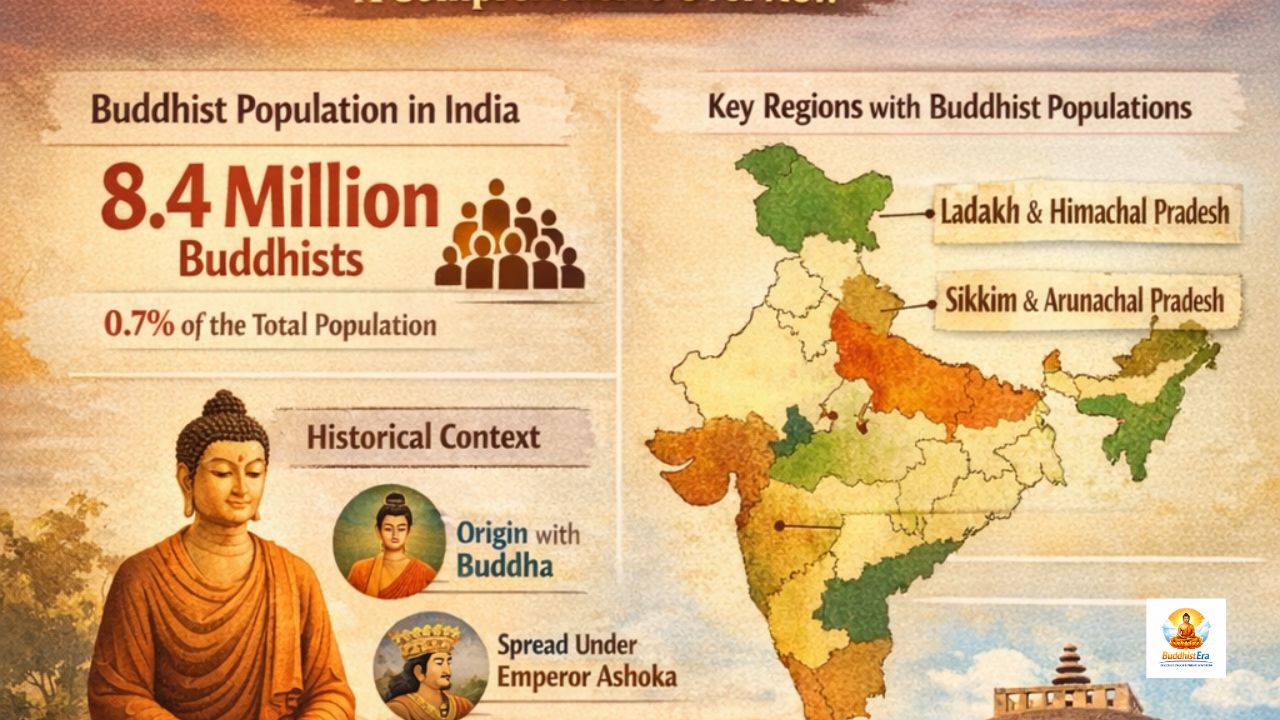
Buddhism, though now a minority religion in India, is deeply rooted in the country’s spiritual and cultural history. Born in India around the 5th–4th century BCE, with the teachings of Siddhartha Gautama, Buddhism once flourished across the subcontinent. But over centuries, its population dwindled as other religions gained prominence.
Why the Population Figures Matter
Knowing the Buddhist population is more than just numbers—it reflects cultural influence, social representation, and policy needs. It helps understand how a religion, once dominant in India, continues to shape society.
History of Buddhism in India
Origin of Buddhism
Buddhism originated in Bihar with Siddhartha Gautama, later known as the Buddha. His teachings of compassion, meditation, and non-violence attracted followers across regions.
Spread During the Mauryan Era
Under Emperor Ashoka, Buddhism spread widely. Ashoka’s support led to the building of stupas and monasteries, making Buddhism a major religious force in India and beyond.
Decline and Revival
Over centuries, invasions and the rise of Hinduism led to Buddhism’s decline in India. However, the 20th century saw a revival, particularly through Dr. B.R. Ambedkar’s Dalit Buddhist movement.
Current Buddhist Population in India
Census Data Overview
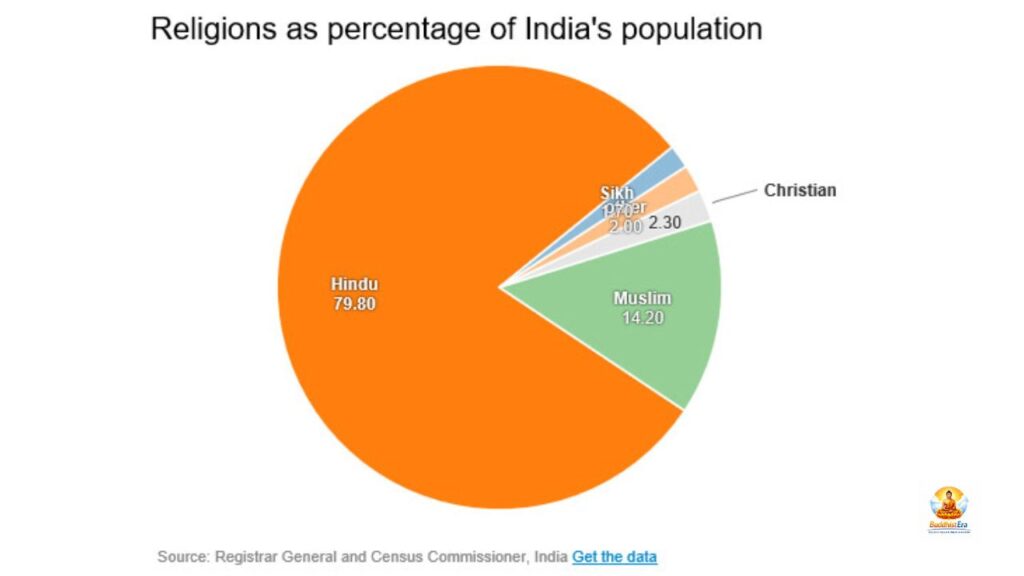
According to the 2011 Census, India has approximately 8.4 million Buddhists, representing 0.7% of the total population. The majority follow Theravada Buddhism, with some Mahayana and Vajrayana practitioners.
Comparison With Other Religions
While Buddhists are a small minority compared to Hindus (79.8%) and Muslims (14.2%), their impact culturally and socially is significant, especially in regions where they form local majorities.
Regional Distribution of Buddhists
Maharashtra – The Heart of Neo-Buddhism
Maharashtra has the largest Buddhist population, largely due to Dr. Ambedkar’s movement among Dalits. Cities like Mumbai and Nagpur have thriving Buddhist communities.
Ladakh and Himachal Pradesh
Northern India hosts Tibetan Buddhists, particularly in Ladakh and Himachal Pradesh. These regions are culturally rich with monasteries and traditional practices.
Sikkim and Arunachal Pradesh
The northeast is home to significant Buddhist populations, preserving Tibetan-style rituals and festivals. Sikkim is almost synonymous with Buddhist heritage.
Other Notable States
States like West Bengal, Karnataka, and Uttar Pradesh also have Buddhist populations, though smaller, contributing to India’s diversity.
Demographics and Social Profile
Ethnic and Caste Composition
Indian Buddhists include Dalits, tribal groups, and Tibetans. The Dalit community, in particular, converted en masse during the mid-20th century to escape caste-based oppression.
Gender and Age Distribution
Most Buddhist communities have balanced gender ratios, with youth participation rising, especially in urban and educational hubs.
Buddhism and Indian Society Today
Cultural Influence
Buddhism has shaped Indian art, literature, and architecture. Stupas, monasteries, and festivals like Buddha Jayanti are living testaments.
Educational and Social Institutions
Institutions like Buddhist universities and meditation centers play a role in spreading teachings and mindfulness practices.
Festivals and Celebrations
Buddha Jayanti, Losar, and local monastery festivals remain important events, fostering community and preserving heritage.
Challenges Faced by Buddhists in India
Minority Status Issues
As a minority, Buddhists face representation challenges in politics and access to resources in some regions.
Preservation of Heritage
Historical sites, manuscripts, and traditions require constant care to prevent loss due to modernization or neglect.
Government and NGO Support for Buddhists
Policies and Welfare Programs
The Indian government provides scholarships, welfare schemes, and minority rights protections to support Buddhist communities.
International Collaboration
India collaborates with countries like Bhutan, Thailand, and Japan to promote cultural and educational exchanges among Buddhists.
The Future of Buddhism in India
Trends in Growth and Revival
Though numbers remain modest, the interest in Buddhist philosophy, meditation, and mindfulness is growing nationally and internationally.
Role of Youth and Social Movements
Young people and social reformers are revitalizing Buddhist culture, emphasizing equality, education, and meditation practices.
Conclusion:-
Buddhism in India may represent a small fraction of the population, but its influence is monumental. From historical glory to modern revival, it continues to shape culture, spirituality, and social consciousness. Understanding its population and demographics offers insight into both India’s past and future spiritual landscape.
FAQs:-
Q1: How many Buddhists live in India?
As per the 2011 Census, there are approximately 8.4 million Buddhists, around 0.7% of India’s population.
Q2: Which state has the highest Buddhist population?
Maharashtra has the largest Buddhist population, primarily due to the Neo-Buddhist movement led by Dr. B.R. Ambedkar.
Q3: Are Buddhists in India mostly Tibetan?
No, while northern states like Ladakh and Himachal Pradesh have Tibetan Buddhists, most Indian Buddhists are from Dalit and tribal communities.
Q4: What are the major festivals of Buddhists in India?
Major festivals include Buddha Jayanti, Losar, and local monastery celebrations.
Q5: Is Buddhism growing in India?
Interest in Buddhism, meditation, and mindfulness is growing, especially among youth, even though the population growth is modest.