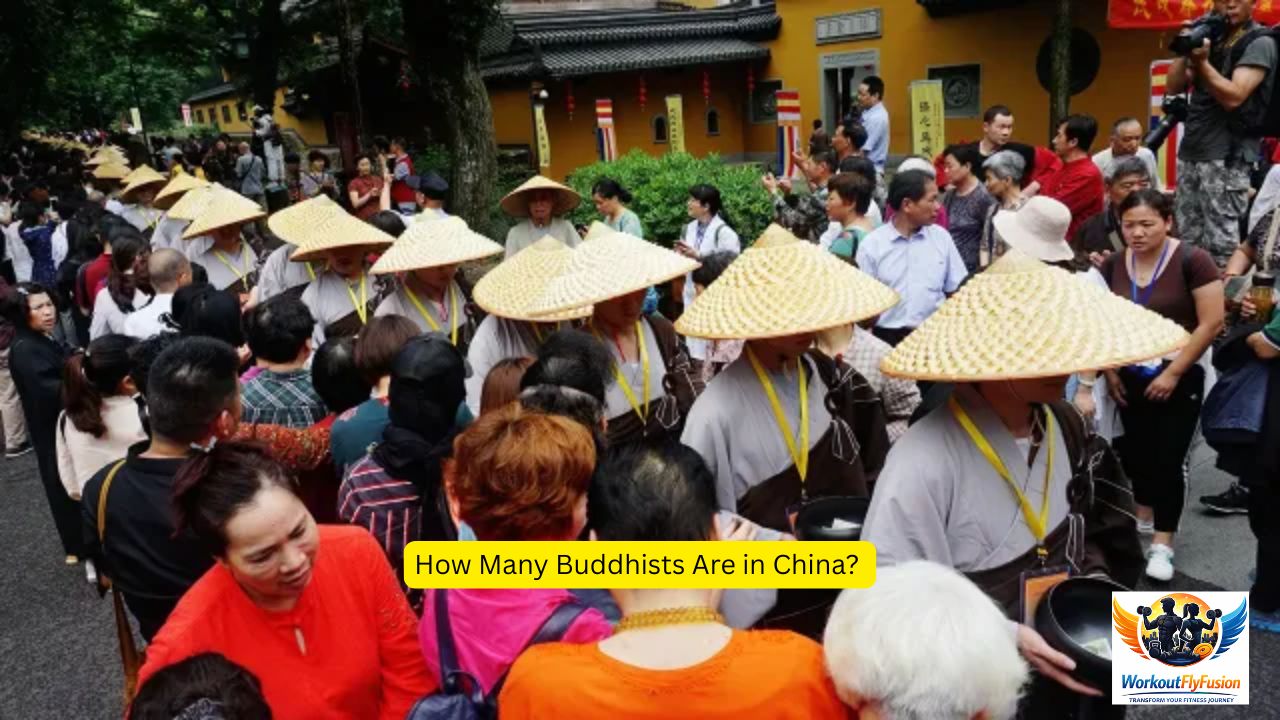
When people think of Buddhism, China almost always enters the conversation. And rightly so. China is not just home to ancient temples and legendary monks—it’s also home to one of the largest Buddhist populations on Earth. But here’s the twist: asking “how many Buddhists are in China?” doesn’t have one clean, simple answer.
Why? Because in China, Buddhism isn’t just a religion. It’s a philosophy, a cultural habit, a moral compass, and sometimes just a quiet presence in daily life—like background music you don’t always notice but would miss if it disappeared.
Let’s unpack the numbers, the nuance, and the reality behind Buddhism in China.
Official Statistics on Buddhists in China
According to official Chinese government data, around 100 million people in China identify as Buddhists. Sounds massive, right? But many experts agree this number is… conservative.
China’s official census does not actively encourage people to declare religious affiliation. Many citizens practice Buddhism privately or culturally without formally identifying as “religious.” As a result, official figures often underrepresent the true scale.
Think of it like this: if someone meditates, visits temples, follows Buddhist ethics—but doesn’t check a box saying “I’m Buddhist”—do they count? In China, millions live exactly like that.
Estimated Number of Buddhists in China
Independent researchers, international organizations, and religious scholars paint a much bigger picture.
Most credible estimates suggest:
- 185 million to 250 million Buddhists in China
- Some high-end estimates even go beyond 300 million
That would make China the largest Buddhist population in the world, by a wide margin.
The gap between low and high estimates exists because Buddhism in China often overlaps with folk religion, Taoism, Confucian ethics, and ancestral traditions. It’s less “either/or” and more “all of the above.”
Percentage of Buddhists in China’s Population
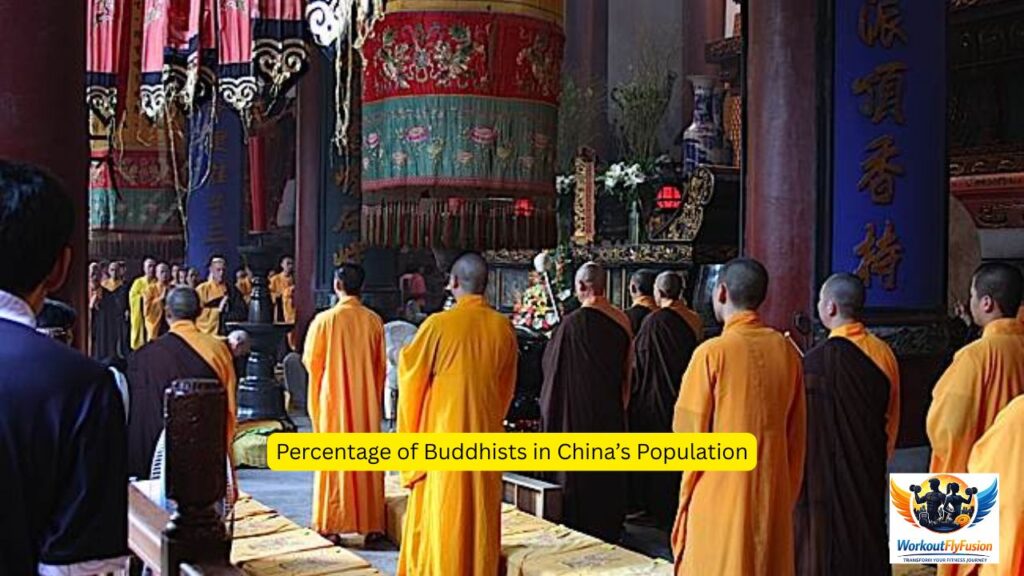
China has a population of about 1.4 billion people.
Depending on the estimate used:
- Buddhists make up 7% to 18% of the population
- Buddhism is the largest organized religion in China
However, if cultural Buddhists are included—those who practice without formal labels—the influence of Buddhism touches nearly one-third of Chinese society in some form.
Historical Growth of Buddhism in China
Buddhism arrived in China around the 1st century CE, traveling along the Silk Road from India. At first, it felt foreign—new language, new ideas, new worldview.
But over centuries, Buddhism adapted. It blended with Chinese culture, producing uniquely Chinese schools like Chan Buddhism, known globally as Zen.
During the Tang Dynasty, Buddhism flourished like a river in flood season—temples, scholars, art, and philosophy everywhere. Later periods saw suppression, revival, collapse, and rebirth. Buddhism in China has always moved like a pendulum, but it never vanished.
Buddhism in Modern Communist China
The 20th century was brutal for religion in China. The Cultural Revolution (1966–1976) devastated temples, scriptures, and monastic life. Buddhism nearly went underground.
But after the 1980s, something unexpected happened: a revival.
Temples reopened. Pilgrims returned. Meditation halls filled again. Today, Buddhism is officially recognized and regulated, but undeniably alive.
Major Buddhist Traditions in China
China doesn’t follow just one kind of Buddhism.
- Han Chinese Buddhism – the most widespread, blending Mahayana teachings with Chinese culture
- Tibetan Buddhism – dominant in Tibet, Qinghai, Sichuan, and Inner Mongolia
- Theravāda Buddhism – practiced mainly among ethnic minorities in Yunnan
Each tradition adds a different color to China’s Buddhist mosaic.
Geographic Distribution of Buddhists
Buddhism isn’t evenly spread.
High concentration areas include:
- Zhejiang
- Fujian
- Sichuan
- Tibet Autonomous Region
- Yunnan
Urban areas often see Buddhism as a spiritual retreat, while rural regions treat it as part of everyday tradition.
Buddhist Monks and Temples in China
China has:
- Over 30,000 Buddhist temples
- More than 200,000 monks and nuns
Temples aren’t just places of worship—they’re community centers, cultural landmarks, and sometimes even tourist magnets.
Buddhism as Philosophy vs Religion
Here’s where China gets fascinating.
Millions of Chinese say, “I’m not religious.”
But they still:
- Burn incense
- Follow karma
- Believe in rebirth
- Visit temples during festivals
Buddhism in China often lives in the heart, not on paperwork.
Youth and Buddhism in China
Surprisingly, young people are coming back.
Faced with stress, competition, and burnout, many Chinese youth turn to meditation, mindfulness, and Buddhist philosophy. Temples now host youth retreats, digital Dharma talks, and even social media monks.
Ancient wisdom, modern problems.
Buddhism Compared to Other Religions in China
Buddhism is larger than:
- Christianity
- Islam
- Protestant and Catholic communities combined
It stands alongside Taoism as a native spiritual force, deeply woven into Chinese civilization.
Is Buddhism Growing or Declining in China?
Numerically, it’s stable. Culturally, it’s growing.
More people may not label themselves Buddhists, but Buddhist ideas—compassion, impermanence, mindfulness—are spreading fast.
The future? Buddhism in China may become less institutional and more internal.
Global Impact of Chinese Buddhism
Chinese Buddhism influences:
- Japan
- Korea
- Vietnam
- Global Zen traditions
China also uses Buddhist heritage as cultural diplomacy, showcasing temples, art, and philosophy worldwide.
Challenges Faced by Buddhists in China
Buddhism faces:
- State regulation
- Commercialization of temples
- Loss of deep practice in favor of surface rituals
Still, it endures—quiet, adaptable, resilient.
Read also:-
- How to Join a Buddhist Monastery in India
- What Is Buddhist Philosophy? A Complete Beginner-Friendly Guide
Final Thoughts on Buddhist Population in China
So, how many Buddhists are in China?
The honest answer: more than the numbers show.
Whether it’s 100 million or 300 million, Buddhism in China isn’t just a statistic. It’s a living current flowing through history, culture, and everyday life—sometimes visible, sometimes hidden, but always present.
FAQs:-
1. How many Buddhists are officially recognized in China?
About 100 million, according to government data.
2. What is the estimated real number of Buddhists in China?
Most experts estimate between 185–300 million.
3. Is Buddhism the largest religion in China?
Yes, it is the largest organized religion.
4. Do Chinese people openly identify as Buddhists?
Many practice privately without formal identification.
5. Is Buddhism allowed in China?
Yes, but it is regulated by the state.