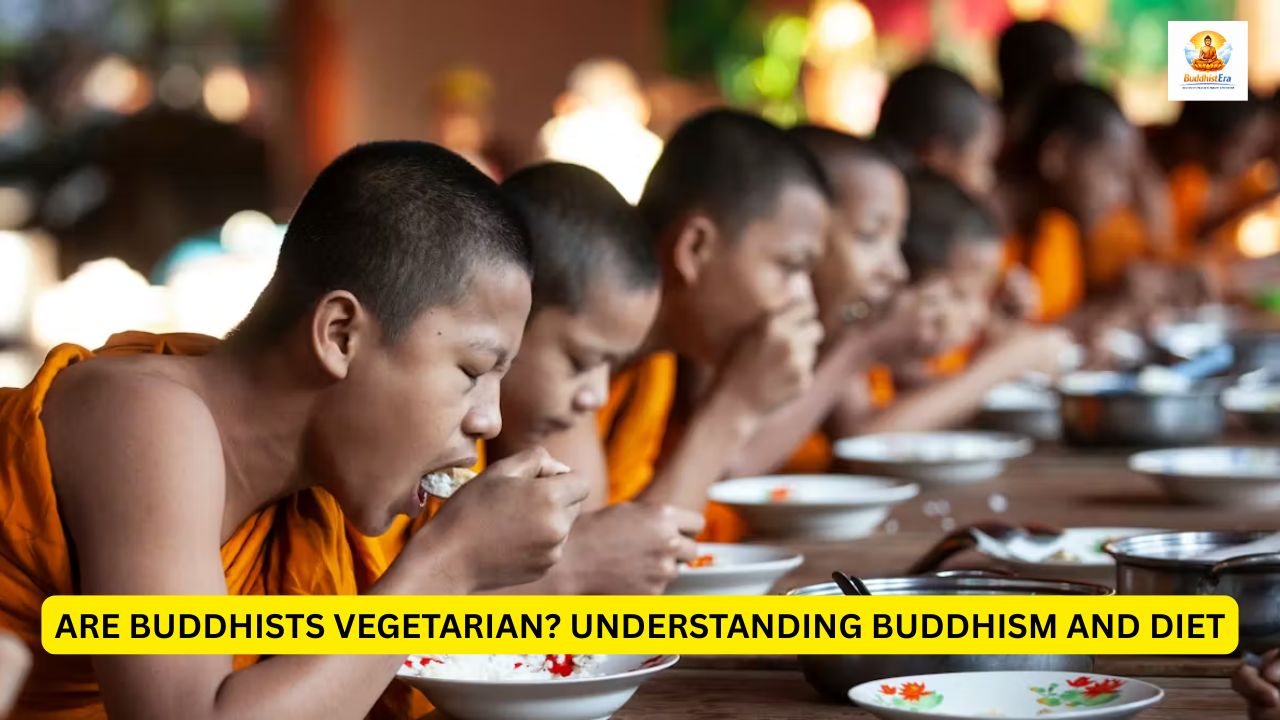
Food is much more than just fuel. It’s a sense of identity, culture and tradition, sometimes even a religious ritual. In all religions, what you eat says an awful lot about what you think. Therefore, when people ask “Are Buddhists vegetarian?” The answer isn’t as easy as a yes or no.
Buddhism is a religion that was established by Gautama Buddha a few two thousand years ago, emphasizes mindfulness, compassion and non-violence. Naturally, many believe that all Buddhists should avoid eating meat. However, is that true?
Let’s eat this with a sense of mindfulness, as eating mindfully.
Core Teachings of Buddhism About Food
The First Precept: Non-Harming (Ahimsa)
One of the most important ethical tenets of Buddhism is non-harm, commonly called Ahimsa. Buddhists adhere to the First Precept to avoid taking life.
It sounds simple, doesn’t it? If killing animals isn’t right and eating meat is not right, then eating it must be a sin too. However, Buddhism typically operates using subtle hues, rather than just black and white.
The focus of the teaching is on intention. Did you personally killed the animal? Did you direct it for slaughter? Did you prepare it?
Compassion Toward All Living Beings
The concept of compassion ( karuna) is the foundation of Buddhist philosophy. All living creatures, whether animal or human, are thought of as a an integral part of death, birth and the rebirth.
Due to the belief in rebirth, the harm animals cause can be karmic. A lot of Buddhists consider this to be an excuse to not eat meat completely.
How Compassion Influences Eating Choices
Consider the concept of compassion like a ripple of the water. If you are kind to others it spreads outward. Making the choice to eat vegetarian is seen as reducing the suffering of people around the world.
Here’s the key: Buddhism encourages awareness, not rigid rules.
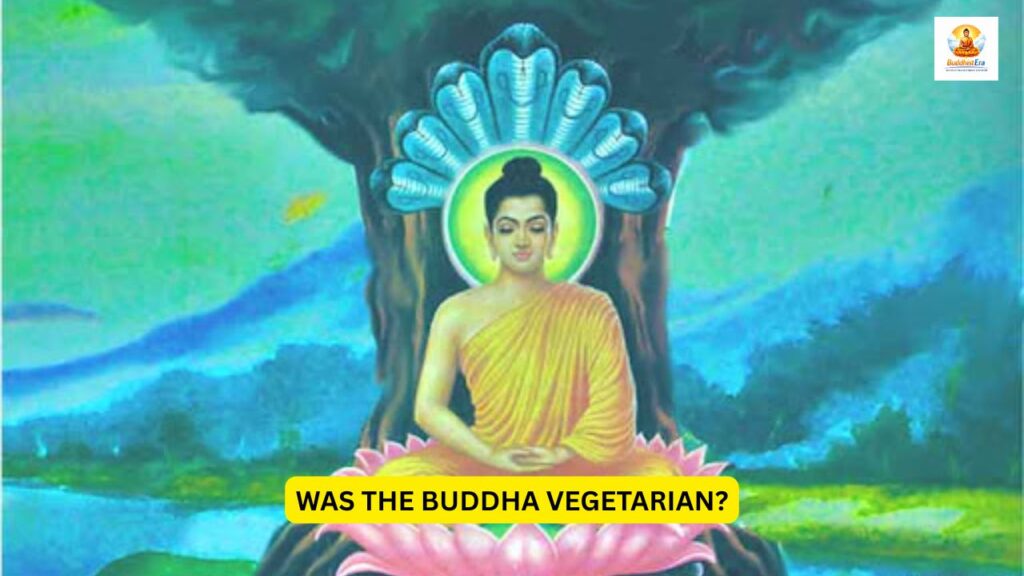
Was the Buddha Vegetarian?
Historical Context of Ancient India
In the time that of Gautama Buddha in the past of India monks lived on offerings of food, whatever was available to them. They did not pick their meals.
If a villager served vegetables and rice and a meal, they would eat it. If somebody provided meat, they were able to eat as well, provided certain conditions were fulfilled.
What Buddhist Scriptures Say
The early Buddhist texts indicate that the Buddha did not require strict vegetarianism. Monks were allowed to eat meat, as long as they did not:
- I saw the animal being killed
- I heard it was killed.
- It is believed that it was killed to be killed
This is also known by”the “Threefold Rule.”
As a matter of fact, the Buddha was not a strict vegetarian.
Different Buddhist Traditions and Vegetarianism
Buddhism developed into several branches, each of which interprets the doctrines in a different way.
Theravada Buddhism
Theravada Buddhism is prevalent in places like Sri Lanka and Thailand. It usually follows the the early Buddhist texts very closely.
According to this tradition, monks are allowed to eat meat as long as it is in accordance with what is known as the Threefold Rule. Lay followers aren’t required to be vegetarian.
Mahayana Buddhism
Mahayana Buddhism, which is popular throughout China, Korea, and Vietnam is often a strong advocate of vegetarianism more strongly.
Many Mahayana sutras advocate compassion by the omission of meat. In China particularly, monastic communities are largely vegetarian.
Vajrayana Buddhism
Vajrayana Buddhism, which is practiced by the Buddhists of Tibet and Mongolia has an approach that is more flexible. Because of the harsh climates in which there is a shortage of vegetables the consumption of meat has historically been widespread.
Geography plays a major role in this.
Why Some Buddhists Choose Vegetarianism
Ethical Reasons
For many Buddhists eating vegetarians, it is a way to align naturally with peace and nonviolence. If you are able to avoid the cause of suffering, why shouldn’t you?
Environmental Reasons
Modern Buddhists frequently associate compassion to environmental sustainability. The production of meat impacts the environment massively, and reducing consumption is viewed as a gesture of global compassion.
Health Considerations
Plant-based diets are linked to lower risk of obesity and heart disease. Certain Buddhists opt for vegetarianism to improve their physical and spiritual well-being.
Why Some Buddhists Eat Meat
The “Threefold Rule” in Early Buddhism
As was mentioned previously If the meat was not specifically slaughtered for their use monks were allowed to consume it.
This rule stresses intention over results. Buddhism frequently asks: What was your motive?
Cultural and Geographic Factors
Imagine the mountainous terrain of Tibet in a place where the crops could barely are able to grow. In the past, survival was dependent on eating the food available.
The practice of religion is adapted to the realities.
Buddhist Monks and Their Diet
Alms and Food Offerings
In numerous Theravada nations, monks go on alms rounds daily. They eat whatever they are given regardless of preference.
Food refusal can be interpreted as an act of pride or a sense of attachment.
Modern Monastic Practices
Today, many monasteries–especially in East Asia–choose vegetarianism voluntarily. It’s believed to increase the sense of compassion and discipline.
Vegetarianism in Buddhist Countries
Sri Lanka and Thailand
In nations that are influenced by Theravada Buddhism vegetarianism isn’t mandatory. There are many who eat meat frequently.
China and Vietnam
In Mahayana Buddhist regions the vegetarian food is extremely developed. The food served in temples is usually free of meat.
Tibet and Mongolia
Within Vajrayana Buddhism cultures, meat consumption was historically widespread because of the environmental need.
Common Misconceptions About Buddhists and Vegetarianism
- All Buddhists are vegetarians. (Not true.)
- Buddhism strictly bans meat. (Depends on the traditions.)
- The consumption of meat makes one an “bad Buddhist.” (Buddhism is a way to avoid such rigid judgements.)
Buddhism concentrates on mindfulness and compassion, not strict policing of conduct.
Buddhism and Veganism
In recent years, a few Buddhists have moved beyond vegetarianism and have adopted veganism, which means avoiding eggs, dairy products, and any animal products.
Why? because industrial farming is often a source of suffering, even if it’s not killing.
It’s a way to extend compassion to modern ethical issues.
Modern Buddhist Movements and Plant-Based Living
All over the world, a lot of Buddhist teachers promote plant-based diets in order to promote socially-engaged Buddhism.
The concept is simple In the end, if we can reduce suffering that we experience and in the world.
However, it is important to remember that Buddhism invites reflection not blind conformity.
Read also:-
- Which One Is the Largest Buddhist Monastery in Sikkim?
- How to Become a Buddhist Monk – A Complete Step-by-Step Guide
Conclusion:-
Also do you think that Buddhists vegetarian?
Some are. Others aren’t.
Buddhism doesn’t necessarily require vegetarianism, but it definitely promotes compassion and non-harm. Based on the tradition, location and personal convictions the practices of eating vary greatly.
The core of Buddhism requires you to eat with mindfulness. To think about. to consider the consequences of your decisions.
Perhaps the best problem should not be “Are Buddhists vegetarian?” rather “How can my food choices reflect compassion?”
The real journey begins.
FAQs:-
1. Does every Buddhist monks eat meat?
No. In Theravada traditions, monks can take meat if they follow the Threefold Rule. In Mahayana practices monks tend to be vegetarian.
2. Does vegetarianism have to be a requirement in Buddhism?
There is no way to make it generally required. It is contingent on customs and commitment of the individual.
3. Why do so many Chinese Buddhists do not eat meat?
Mahayana doctrines from China insist on compassion for animals and promote vegetarianism.
4. Can a Buddhist be vegetarian and still be a follower of the first Precept?
Many believe that this First Precept as avoiding killing directly, and not necessarily eating meat that wasn’t killed to feed them.
5. Is the trend towards veganism growing in the ranks of Buddhists?
Yes. A lot of modern Buddhists choose to go vegan due to the concern about suffering of animals and the environmental impact.