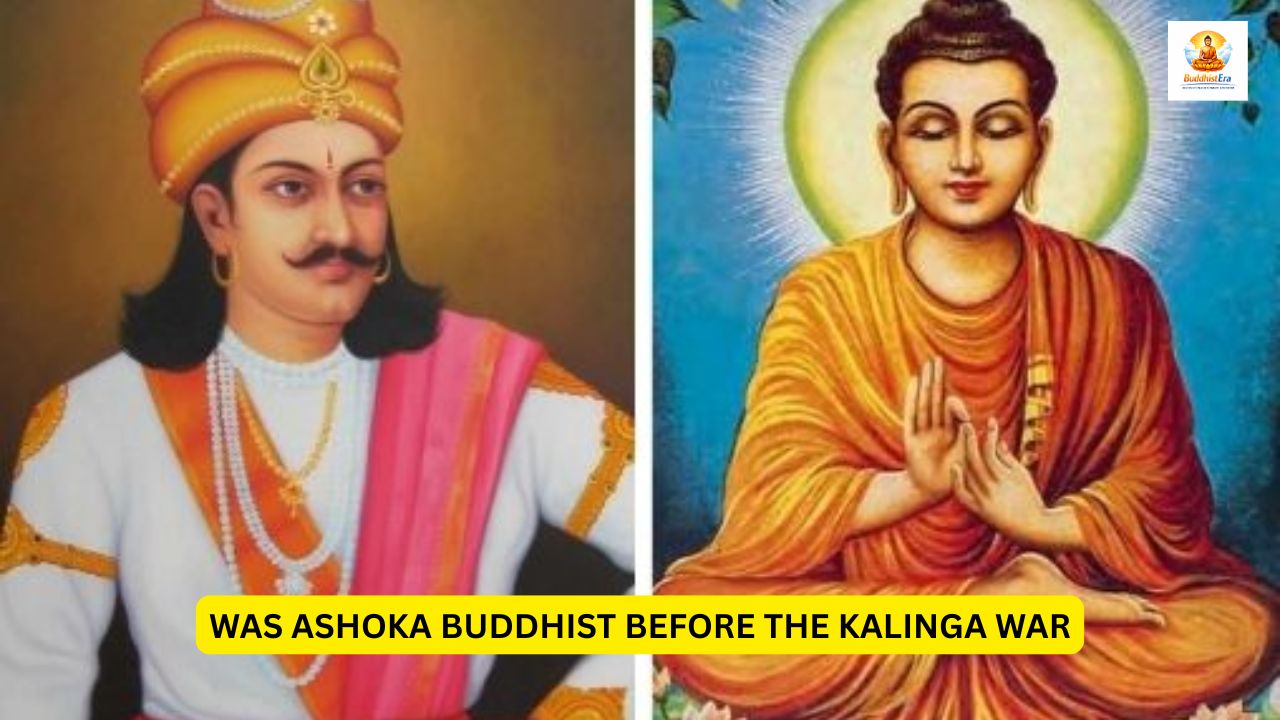
Emperor Ashoka is remembered as one of the greatest rulers in Indian history, not just for his vast empire but for his dramatic transformation after the Kalinga War. He is widely known as a follower of Buddhism and a promoter of peace, non-violence, and moral governance. But one question often confuses students, history lovers, and competitive exam aspirants alike: Was Ashoka a Buddhist before the Kalinga War?
The simple answer is no, but the full story is far more interesting. Let’s explore Ashoka’s early beliefs, his mindset before the war, and how the Kalinga War changed the course of his life forever.
Ashoka’s Early Life and Religious Beliefs
Ashoka was born into the Mauryan dynasty, the grandson of Chandragupta Maurya and the son of Bindusara. During this time, the Mauryan rulers followed a mix of religious traditions that included Brahmanism, Ajivika philosophy, and other contemporary belief systems. There is no strong historical evidence to suggest that Ashoka followed Buddhism during his early life or before becoming emperor.
In fact, ancient texts describe young Ashoka as ambitious, strong-willed, and sometimes ruthless. His primary focus was expanding and securing the Mauryan Empire. Like many rulers of his time, religion was not the central force guiding his governance or personal life before the Kalinga War.
Ashoka Before the Kalinga War: A Typical Ancient Ruler
Before the Kalinga War, Ashoka ruled like most powerful kings of the ancient world. He believed in military strength, conquest, and authority. His administration was strict, and maintaining control over a large empire was his main priority. Several historical sources suggest that Ashoka was known for harsh punishments and aggressive policies during his early reign.
At this stage, Ashoka had not embraced Buddhist principles such as non-violence, compassion, or tolerance. War and expansion were seen as legitimate tools for strengthening the empire. This mindset directly led to the decision to invade Kalinga.
The Kalinga War: A Turning Point in Ashoka’s Life
The Kalinga War, fought around 261 BCE, was one of the bloodiest battles in ancient Indian history. Kalinga, located in present-day Odisha, was a prosperous and strategically important region. Ashoka’s victory came at a terrible cost.
According to Ashoka’s own rock edicts, over 100,000 people were killed, many more were injured, and thousands were deported. What made this war unique was not the scale of violence alone, but Ashoka’s reaction to it. For the first time, he truly reflected on the suffering caused by his ambition.
Seeing the devastation, loss of life, and pain of innocent civilians deeply disturbed him. This emotional shock marked the beginning of his inner transformation.
Did Ashoka Become Buddhist Immediately After the War?
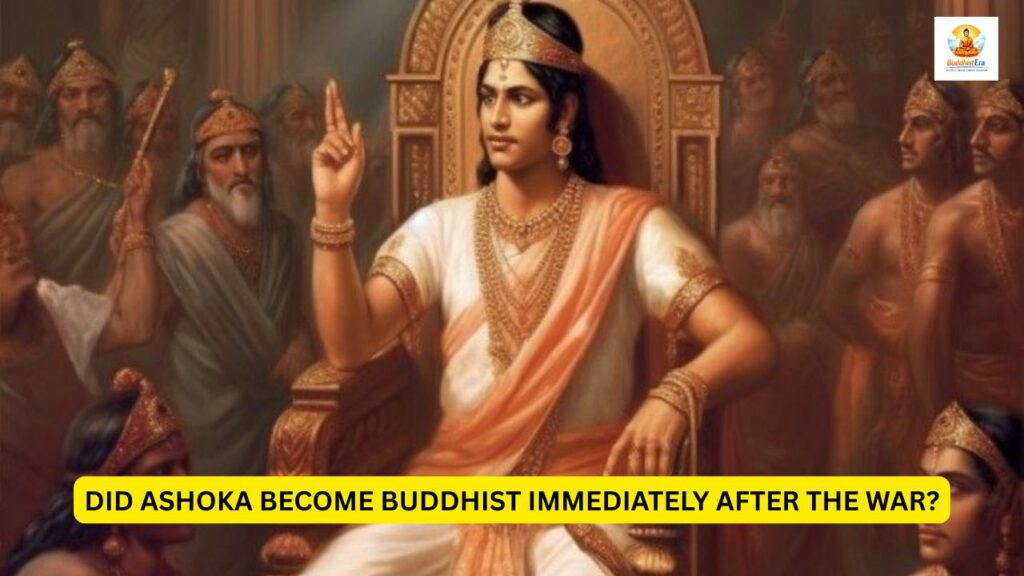
An important point often misunderstood is that Ashoka did not become a Buddhist instantly after the Kalinga War. His conversion was gradual. Initially, he felt remorse and guilt, which led him to seek spiritual guidance.
Historical evidence suggests that Ashoka first became a Dhamma follower, focusing on moral values such as kindness, respect, self-control, and compassion. Over time, his interest in Buddhism deepened, especially after interacting with Buddhist monks.
Eventually, Ashoka formally embraced Buddhism and became a devoted supporter of the Buddha’s teachings.
Ashoka’s Adoption of Buddhism After Kalinga War
After accepting Buddhism, Ashoka completely changed his approach to governance. He replaced military aggression with Dhamma Vijaya, meaning “conquest through righteousness.” Instead of expanding borders through war, he focused on winning hearts through ethical rule.
Ashoka promoted religious tolerance, banned unnecessary animal sacrifices, supported welfare activities, and encouraged non-violence. He also played a crucial role in spreading Buddhism beyond India, sending missionaries to Sri Lanka, Central Asia, and Southeast Asia.
His famous pillars and rock edicts clearly show Buddhist influence, emphasizing compassion, moral duty, and respect for all living beings.
Clear Answer: Was Ashoka Buddhist Before the Kalinga War?
To be absolutely clear:
Ashoka was not a Buddhist before the Kalinga War.
He followed traditional royal beliefs and ruled as a conqueror.
The horrors of the Kalinga War led to deep remorse.
This remorse slowly guided him toward Buddhism.
The Kalinga War was the turning point that transformed Ashoka from a powerful warrior king into a peaceful ruler remembered for his moral leadership.
Why This Question Still Matters Today
Understanding Ashoka’s transformation helps us realize that change is possible, even for those in positions of immense power. His life shows how personal reflection and empathy can reshape leadership and society.
For students, this topic is important for history exams, UPSC, SSC, and other competitive tests. For general readers, it is a powerful reminder that true greatness lies not in conquest, but in compassion.
Read also:-
- How Many Buddhist Countries in the World?
- Is Sabarimala a Buddhist Temple? The Untold Historical Debate
Conclusion:-
Ashoka’s journey from a ruthless conqueror to a compassionate Buddhist ruler is one of history’s most inspiring transformations. He was not Buddhist before the Kalinga War, but the immense human suffering he witnessed forced him to rethink his values and beliefs. This shift not only changed his life but also influenced the moral and cultural history of India and the world.
Ashoka’s story proves that even the darkest moments can lead to profound personal awakening—and lasting peace.