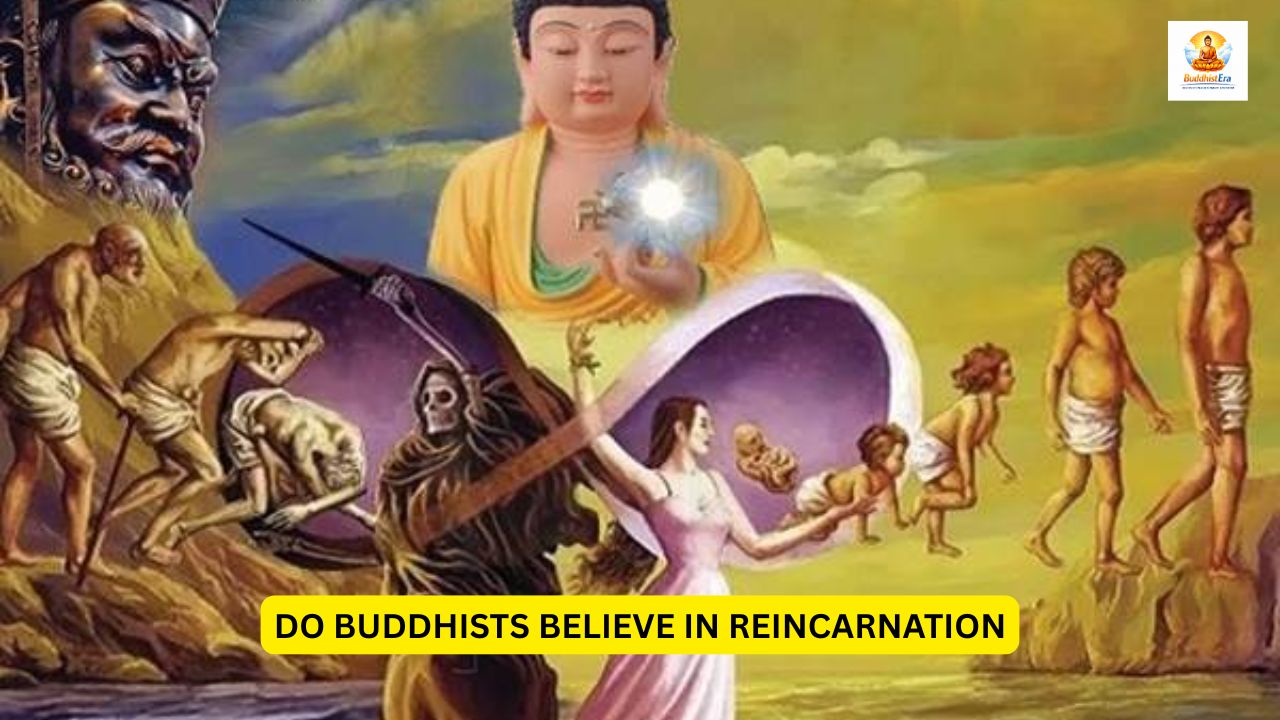
So, do Buddhists believe in reincarnation? Short answer? Yes… but not exactly in the way you might think.
When people hear “reincarnation,” they often imagine a soul leaving one body and entering another, like changing clothes. But Buddhism flips that idea on its head. It challenges what we think about identity, self, and even existence itself.
Let’s break it down step by step.
Understanding the Core of Buddhism
Before diving into reincarnation, we need to understand Buddhism itself.
Buddhism began with Siddhartha Gautama, later known as the Buddha. He wasn’t a god. He was a human who achieved enlightenment around the 5th century BCE in India.
His teachings focus on:
- The nature of suffering (Dukkha)
- The cause of suffering (craving and attachment)
- The end of suffering
- The path leading to the end of suffering
Notice something? The goal isn’t heaven. It’s liberation from suffering.
And that’s where rebirth comes in.
What Is Reincarnation?
Reincarnation usually means the belief that a soul is reborn into a new body after death.
In many traditions, especially Hinduism, the soul (Atman) continues its journey through multiple lifetimes until liberation.
But Buddhism? It says something radically different.
Reincarnation vs Rebirth in Buddhism
Buddhists often prefer the word rebirth rather than reincarnation.
Why?
Because Buddhism rejects the idea of a permanent soul.
Instead of a soul traveling from body to body, Buddhism teaches that a stream of consciousness continues based on karma. Think of it like lighting one candle from another. The flame continues, but it’s not the same flame.
Subtle difference. Big meaning.
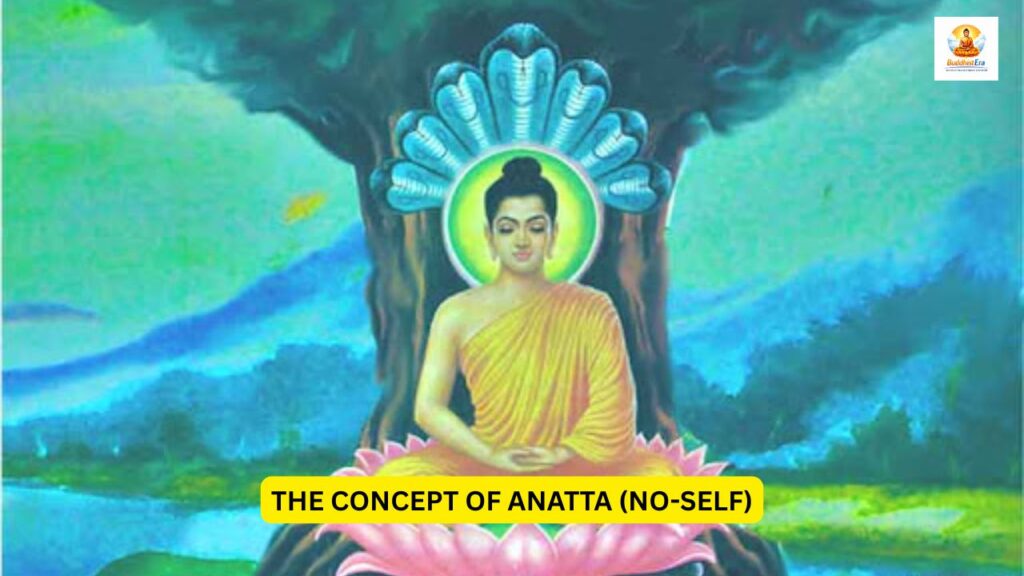
The Concept of Anatta (No-Self)
Here’s where things get fascinating.
What Is Anatta?
Anatta means “no-self.” It’s one of Buddhism’s core teachings.
According to Buddhism:
- There is no eternal, unchanging soul.
- What we call “self” is a collection of changing physical and mental processes.
Imagine a river. Is it the same river every second? The water keeps flowing. It changes constantly. Yet we still call it by one name.
That’s you.
How Anatta Changes the Idea of Reincarnation
If there’s no permanent self, then what gets reborn?
Not a soul.
Instead, it’s a continuation of cause and effect — karma shaping future existence.
The Law of Karma
Karma simply means action.
But it’s more than just “good deeds equal good rewards.” It’s about intention.
Every action, thought, and intention plants a seed. Those seeds eventually bear fruit — sometimes in this life, sometimes in another.
Karma acts like momentum. When this body dies, that momentum doesn’t just vanish.
It continues.
The Cycle of Samsara
Samsara is the cycle of birth, death, and rebirth.
It’s often described as a wheel — the Wheel of Life.
In Buddhism, samsara isn’t something to celebrate. It’s something to escape.
Why?
Because existence within samsara is marked by suffering, impermanence, and dissatisfaction.
The Six Realms of Existence
Buddhist cosmology describes six realms where rebirth can occur:
- Human Realm – Balanced between suffering and opportunity.
- Animal Realm – Dominated by instinct and ignorance.
- Hungry Ghost Realm – Driven by insatiable desire.
- Hell Realm – Intense suffering.
- Asura Realm – Jealous and competitive beings.
- Deva Realm – Heavenly beings enjoying pleasure.
These realms can be interpreted literally or symbolically. Some see them as physical places. Others see them as states of mind.
Ever felt like you were in “hell” emotionally? That’s the idea.
What Is Nirvana?
Nirvana means “blowing out” — like extinguishing a flame.
It’s the end of craving, ignorance, and suffering.
And most importantly, it’s the end of rebirth.
When someone reaches enlightenment, they break free from samsara. No more cycles. No more suffering.
Do All Buddhists Believe the Same Thing?
Not exactly.
Theravāda Buddhism
Generally takes rebirth more literally. Karma influences future physical rebirths.
Mahāyāna Buddhism
Emphasizes compassion and the Bodhisattva path. Rebirth is still central but often framed within broader philosophical ideas.
Vajrayāna Buddhism
Includes detailed teachings about intermediate states (Bardo) between death and rebirth.
Different flavors. Same foundation.
Scientific and Modern Interpretations
Some modern Buddhists interpret rebirth symbolically.
They say rebirth happens moment to moment.
Each moment you’re slightly different from the last. Your habits recreate you daily. In that sense, you’re constantly being reborn.
Others maintain traditional beliefs about literal rebirth.
Buddhism doesn’t demand blind faith. It encourages investigation.
Common Misconceptions
Is There a Soul?
No permanent soul in classical Buddhist teaching.
Is Rebirth Eternal?
No. The goal is to end the cycle.
How Buddhist Rebirth Differs from Western Views
In Christianity, there’s typically one life followed by judgment.
In New Age spirituality, reincarnation often centers around soul evolution.
Buddhism? It focuses on ending suffering and realizing emptiness — not perfecting a soul.
It’s less about becoming something and more about letting go.
Why Rebirth Matters in Daily Practice
Rebirth isn’t just a theory. It shapes behavior.
If your actions echo beyond this lifetime, ethics suddenly matter more.
Kindness matters.
Mindfulness matters.
Compassion matters.
Your future — whatever form it takes — depends on what you plant now.
Can You Escape Rebirth?
Yes.
The Buddha laid out the Eightfold Path:
- Right View
- Right Intention
- Right Speech
- Right Action
- Right Livelihood
- Right Effort
- Right Mindfulness
- Right Concentration
Follow this path, cultivate wisdom and compassion, and enlightenment becomes possible.
Freedom from rebirth isn’t a reward.
It’s a release.
Final Thoughts on Buddhist Rebirth
So, do Buddhists believe in reincarnation?
Yes — but not in a simple, soul-jumping sense.
They believe in rebirth driven by karma, shaped by intention, and sustained by ignorance and craving.
And more importantly, they believe it’s possible to end the cycle.
Think of life like a spinning wheel. As long as you push it with desire and attachment, it keeps turning. Stop pushing… and it slows down.
Eventually, it stops.
That stopping is liberation.
Read also:-
- Was Jagannath Temple a Buddhist Temple? A Deep Historical Exploration
- How to Become a Buddhist Monk – A Complete Step-by-Step Guide
Conclusion:
Buddhism presents a unique perspective on reincarnation — one that removes the idea of a permanent soul and replaces it with a flowing chain of cause and effect. Rebirth is not about “you” coming back in a new body. It’s about continuity without identity.
The real question Buddhism asks isn’t “Who will you be next?”
It’s “Why are you still suffering now?”
And that’s a much deeper question.
FAQs:-
1. Do Buddhists believe in a soul?
No. Traditional Buddhism teaches Anatta, meaning there is no permanent, unchanging soul.
2. Is Buddhist rebirth the same as Hindu reincarnation?
Not exactly. Hinduism teaches a permanent soul (Atman), while Buddhism rejects the concept of a permanent self.
3. Can someone remember their past lives in Buddhism?
Some Buddhist texts mention that highly enlightened beings may recall past lives, but it’s not considered common.
4. Do modern Buddhists take rebirth literally?
Some do, others interpret it symbolically. It varies depending on tradition and personal belief.
5. What is the ultimate goal regarding rebirth?
The ultimate goal is Nirvana — complete liberation from the cycle of birth and death.