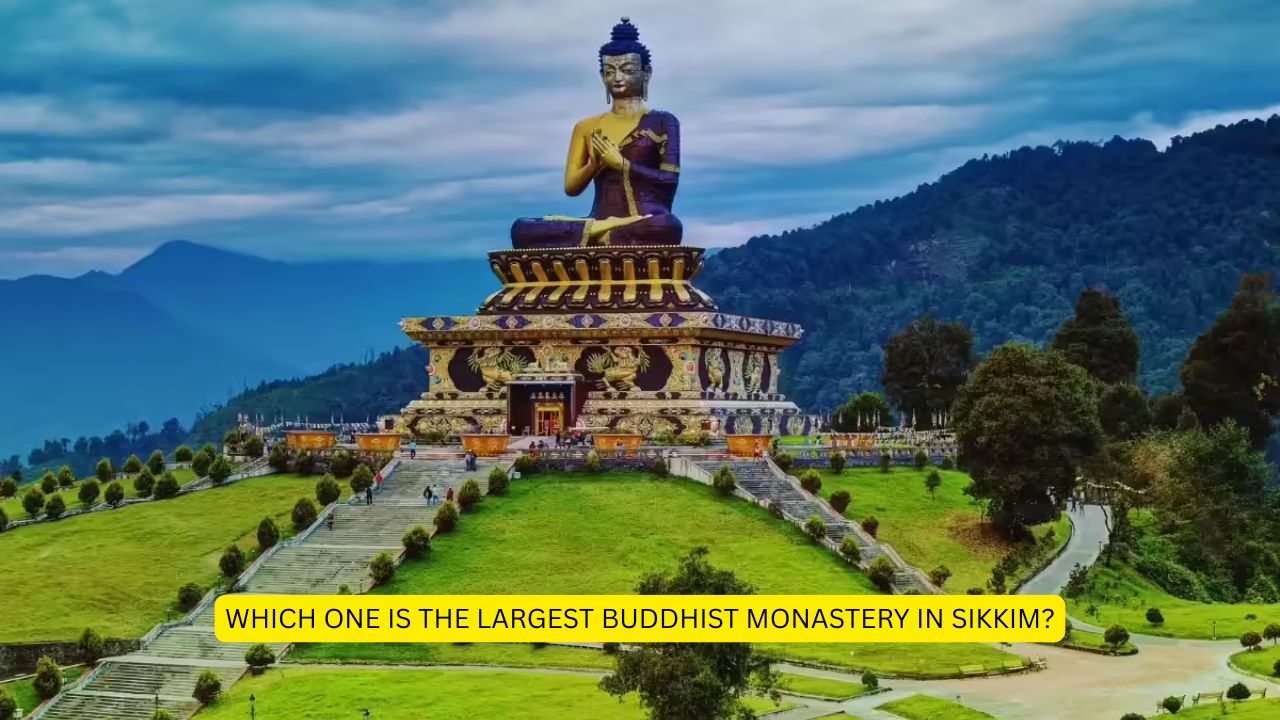
Sikkim appears like a page cut straight from an Himalayan fairytale. The snow-capped peaks, the flying prayer flags, fog-filled valleys – everywhere you turn, peace is a whisper. If you’re thinking, which one is the biggest Buddhist temple situated in Sikkim? The answer is obvious: Rumtek Monastery.
Let’s get into the history of this monastery, its spirituality, and the reasons it is the most prominent–physically as well as culturally, among the monasteries of Sikkim.
Introduction to Buddhism in Sikkim
Historical Roots of Buddhism in Sikkim
Buddhism is a part of Sikkim’s culture for a long time. The state began to embrace Tibetan Buddhism in the 17th century, when Buddhist lamas were the first to crown the Chogyal (king) of Sikkim. Since then, monasteries were no longer only religious sites but also guardians of culture, art as well as governance.
Influence of Tibetan Buddhism
Sikkim is a part of the Vajrayana tradition, which is heavily inspired by Tibetan Buddhism. The monasteries here function as living museums that preserve the sacred texts as well as rituals and teachings that were spread across the majestic Himalayas.
Overview of Monasteries in Sikkim
Importance of Monasteries in Himalayan Culture
In Sikkim Monasteries aren’t just structures, they’re the beating hearts of communities. They are the center of spirituality teach monks, as well as organize lively festivals. Think of them as spiritual schools located on top of mountains.
Famous Monasteries in Sikkim
Sikkim hosts more than 200 monasteries. Some of the most famous ones are:
- Pemayangtse Monastery
- Tashiding Monastery
- Enchey Monastery
However, none of them can compete with the size and magnitude in the size and prominence Rumtek Monastery.
Rumtek Monastery – The Largest in Sikkim
Location and Setting
Rumtek Monastery is located about 24 km from Gangtok located on a hill that overlooks lush valleys. The trip itself is spiritual with its winding roads and cool mountain air and prayer flags greeting you.
Historical Background
The monastery was first constructed around the time of the 16th century The monastery was rebuilt during the 60s, under the supervision by the 16th Karmapa, Rangjung Rigpe Dorje. He left Tibet following the Chinese invasion and established Rumtek as the seat of the Karma Kagyu lineage outside Tibet.
Architectural Grandeur
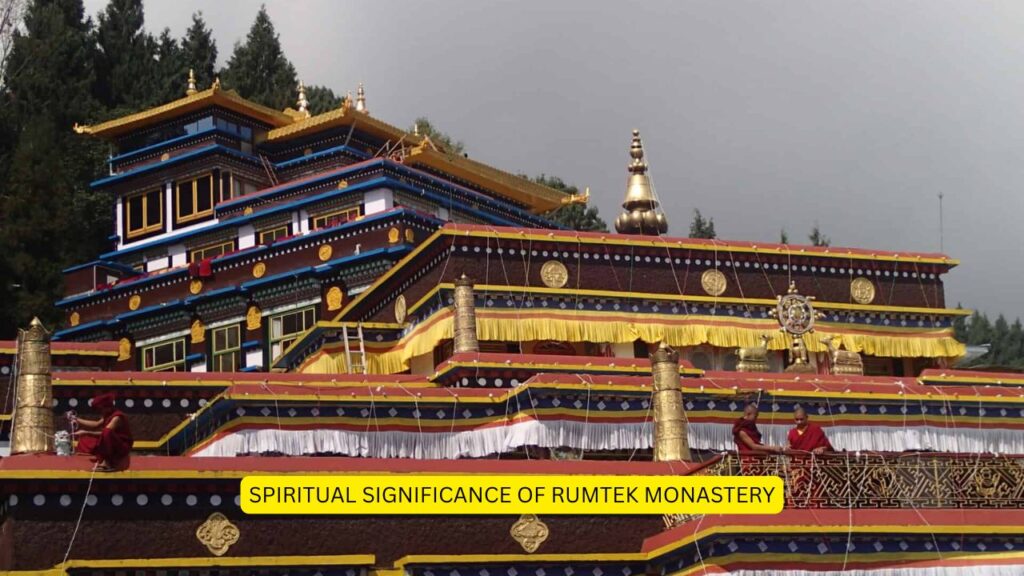
Rumtek isn’t just large–it’s majestic. Built in the traditional Tibetan style, it’s more like more of a palace than an actual monastery.
Main Shrine Hall
The main hall is large enough to accommodate hundreds of monks praying. Beautiful murals, huge pillars, and vibrant frescoes create a surreal ambience.
Golden Stupa
Inside is an ethereal stupa that is adorned with gold and contains remnants that date back to 16th Karmapa. It shimmers under soft lighting and radiates peace.
Spiritual Significance of Rumtek Monastery
Seat of the Karmapa
Rumtek is the main home for Rumtek, which is the main seat of Karma Kagyu school of Tibetan Buddhism in exile. The Karmapa Head of this lineage is a holder of enormous spiritual authority.
Role in Karma Kagyu School
The monastery serves as an institute for the teaching of Buddhist philosophy, meditation and other ritual practices. Monks from all over the globe come to learn.
Comparing Rumtek with Other Major Monasteries
Pemayangtse Monastery
In West Sikkim, Pemayangtse is an ancient and significant historical site. However, in terms of size and importance, Rumtek surpasses it.
Tashiding Monastery
The sacred chorten is a popular feature, Tashiding is spiritually powerful however, it is smaller in physical size.
Enchey Monastery
It is located near Gangtok, Enchey is accessible and gorgeous, but not as vast as Rumtek.
If people are asking, “Which is the largest Buddhist monastery in the world?” Sikkim ?”–Rumtek is in the clear.
Festivals Celebrated at Rumtek Monastery
Losar Festival
Losar commemorates the Tibetan New Year of the Tibetan. The monastery is bursting with the colors, music, and rituals. It’s similar to watching a spiritual dance.
Mahakala Dance
The Mahakala dance is performed by monks in robes. Cham dance, which symbolizes the victory of goodness over evil. It’s dramatic, powerful and memorable.
Architecture and Design Elements
Tibetan Style Features
The monastery is home to:
- Roofs that are sloping
- Vibrant red, yellow and blue hues
- Prayer wheels
- Carvings with intricate detail
It echoes the classic Tibetan monastic architecture.
Murals and Thangkas
The walls are decorated with thangkas (religious paintings) as well as murals illustrating Buddhist gods as well as cosmic symbols. Each stroke tells a tale.
Visiting Rumtek Monastery
Best Time to Visit
From March to June, and September through December are perfect. Clear skies mean stunning Himalayan views.
How to Reach
- Nearest Airport: Pakyong Airport
- Nearest Railway Station: New Jalpaiguri (West Bengal)
- From Gangtok From Gangtok: 1 hour drive
Entry Guidelines
Visitors are required to keep their voices quiet be modest, dress appropriately, and photography is prohibited in certain areas.
Cultural and Tourism Impact
Influence on Local Economy
Rumtek is a popular destination for tourists every year, which boosts local hotels, transport and craft businesses.
Pilgrimage Importance
For Buddhists all over the world, Rumtek is a sacred place of pilgrimage. It’s a Mecca for those who adhere to the Karma Kagyu lineage.
Preservation and Conservation Efforts
The maintenance of such a huge structure in a mountainous area isn’t simple. Restoration as well as security measures and monastic discipline are all part of preserving its history.
Read also:-
- Was Jagannath Temple a Buddhist Temple? A Deep Historical Exploration
- How to Become a Buddhist Monk – A Complete Step-by-Step Guide
Conclusion:-
Which is the biggest Buddhist temple in Sikkim? Absolutely, it’s Rumtek Monastery. But it’s more than the size. It’s about influence and history architectural, as well as spiritual power. Rumtek symbolizes the power of resilience, rebuilt in exile, growing in the faith and welcoming seekers from all over the world.
If Sikkim is the top Himalayan jewel and the Himalayas, then Rumtek is the most brilliant gem.
FAQs:-
1. Are Rumtek Monastery bigger than Pemayangtse Monastery?
Sure, Rumtek has more to offer in regards to physical size and importance to the institution.
2. What is it that makes Rumtek Monastery famous?
This is where the Karma Kagyu lineage, and is home to the golden stupa that was built by the 16th Karmapa.
3. Can tourists visit Rumtek Monastery?
Yes, visitors are welcome however, they must adhere to the guidelines for entry and adhere to the rules of the monks.
4. The distance to Rumtek far from Gangtok?
It is located approximately 24 kilometers away from Gangtok.
5. When is the best time to go to Rumtek Monastery?
The months of autumn and spring offer the most beautiful weather and stunning beauty.